White House Turns to Korean War-Era Law as Diesel Prices Stay Above $6
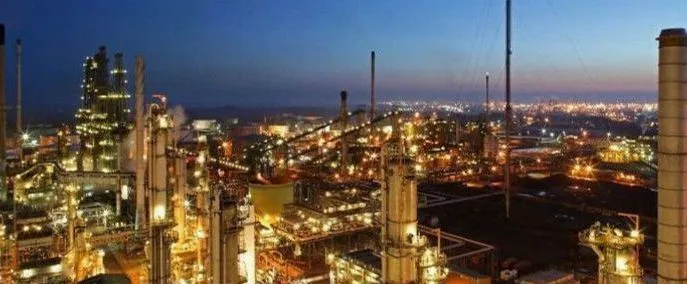
The United States has used a 1950 authority to help boost fuel production at a small Texas refinery, Vice President JD Vance said on Tuesday, as the Trump Administration is running out of levers to lower record-high fuel prices.
“I am pleased to announce that the Trump administration, working with the refinery at Delek, has used the Defense Production Act and we’re going to expand the refinery right here in Tyler, Texas,” Vance said at a political rally in Texas.
“We want millions of gallons of commercial-grade and military-spec fuel to come out of this refinery, in addition to what it’s already producing,” the Vice President said.
The Defense Production Act, originally enacted in 1950 in response to the start of the Korean War, is a federal law granting broad authority to the President to direct private businesses to produce critical materials and services for national defense and emergency preparedness.
At the Texas rally, VP Vance did not provide any timelines or volumes for the “millions of gallons” of additional fuel Delek’s 74,000-barrel-per-day refinery would produce. It is uncertain how much time the refinery expansion would take or if the Defense Production Act would be extended to other refineries in the United States.
It’s certain that additional output is unlikely to hit the market within three weeks and lower fuel prices ahead of the midterm elections on November 3.
Despite slight declines in recent days, gasoline and diesel prices remain elevated. The U.S. national average price of a gallon of regular gasoline set a record for October, and this has been the first October ever to see the national average above $4 per gallon. As of Tuesday, the national average was $4.34 per gallon.
The national diesel average was at $6.28 a gallon, lower than $6.31 a week ago, but so much more than $3.65 at this time last year.
Diesel prices will remain high and above $6 per gallon for quite some time, analysts say, noting that the deal with Russia for diesel supply wouldn’t make much (or any) difference.
The global diesel market is exceptionally tight because of the Middle East conflict, with too little fuel making it out of the Strait of Hormuz, as well as a lack of supply from Russia, whose refineries are struggling to produce fuel amid Ukrainian drone attacks.
The U.S.-Russia “diesel deal” – if it is executed at all – is for 35.76 million barrels in total—volumes equivalent to about 10 days of U.S. domestic diesel demand or just over one single day of global demand, analysts say.
After an initial decline in wholesale diesel prices on Friday, diesel futures prices spiked again this week, with ULSD in New York and gasoil in London both rising to trade around $200 per barrel on Tuesday, Ole Hansen, Head of Commodity Strategy at Saxo Bank, said.
Tom Kloza, chief energy advisor at Gulf Oil, noted on Tuesday, “Absolutely stunning price spikes in wholesale diesel today…Market clearly not believing that Russian oil is on the way.”
The U.S. retail diesel price record of $6.53 per gallon could be topped by the midterms, according to Kloza.
Patrick De Haan, head of petroleum analysis at GasBuddy, said on Tuesday, “wholesale diesel prices not blinking over Russia/US ‘deal’”, and that “$6/gal diesel may be here to stay for now- truckers and farmers not going to see any relief anytime soon.”
This post appeared first on https://oilprice.com